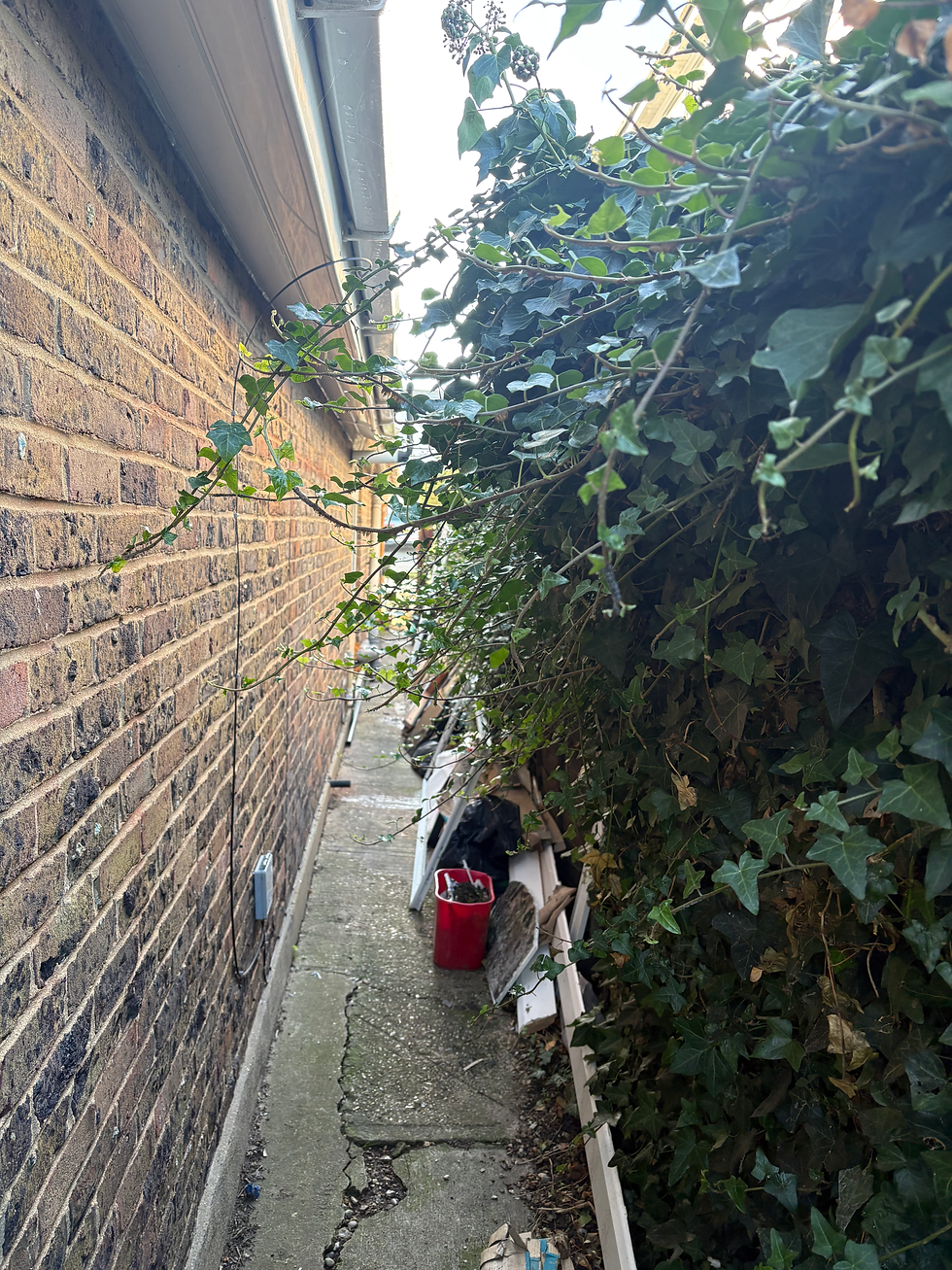
Who knew that there could be so many leaves in here!
- Matt Millhouse
- Nov 19
- 2 min read
Updated: 7 days ago
When you think of garden maintenance, the first thing that usually comes to mind is mowing the lawn, trimming hedges, or clearing up after a storm. But sometimes, the biggest surprises are hidden in the places we rarely look — like your floor gutter drain.
Recently, while cleaning out a customer’s drain on Waxwell Road, Hullbridge, I lifted the cover and genuinely thought: “Who knew there could be so many leaves in here?!” What looked like a simple blockage turned out to be a packed, soggy mass of leaves, dirt, mud, and debris that had built up over months.
Why drains get blocked so easily
Outdoor drains catch everything:
Falling leaves 🍂
Dirt washed down by rain
Small twigs and stones
Moss and algae
Even soil from plant beds nearby
Over time, this mixture settles, compacts, and forms a thick layer that stops water from draining properly.
What starts as a slow drain can quickly turn into:
Standing water
Flooding near patios or doors
Damp walls
Damage to paving or foundations
All from something as simple as leaf build
up.

The surprising part?
You often don’t realise how bad it is until the drain cover comes off. Even a small drain can hold an unbelievable amount of debris — and once it's full, water has nowhere to go.
A quick clean makes a big difference
After removing handfuls of leaves and scraping out all the mud, the difference was instant. Water that had been sitting on the surface for days suddenly flowed away freely. Just a simple clean, but a big improvement.
How to avoid this happening
To keep your drains working properly:
Check them every couple of months
Clear leaves regularly in autumn
Remove moss from around the drain edges
Book a professional clean if water starts pooling
It’s a quick job — but one that saves homeowners from bigger problems down the line.


Comments